The Tiamat Simulation Suite
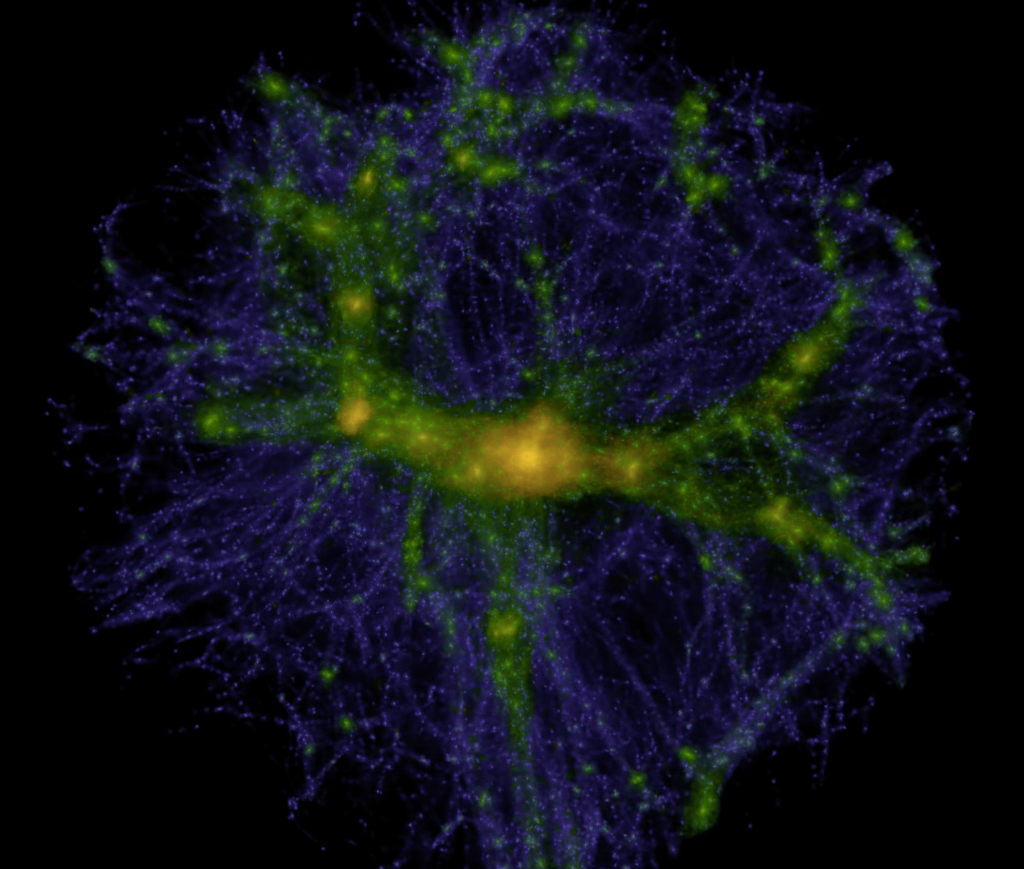
Overview
Tiamat is a high-redshift N-body simulation suite that tracks the rapid build-up of early galaxies with enough temporal resolution to follow individual haloes as they grow, merge, and reshape the Epoch of Reionization (EoR). It combines a cosmologically meaningful volume with fine-grained time sampling to capture early galaxy assembly and produce accurate merger trees.
Why it matters: dense time sampling keeps merger trees physically meaningful during the fastest epoch of galaxy growth, where long snapshot gaps can fail to capture the growth of structure powering galaxy formation.
- Cosmologically meaningful volume with resolution tuned to the low-mass galaxies that drive reionization.
- Time-dense outputs enable robust halo merger histories during the most dynamical epoch.
- Designed to anchor early-Universe galaxy/IGM modeling for the DRAGONS program.
Key Results
Concise summaries of flagship Tiamat results, with details in the papers below.
- Only a minority (~20%) of haloes are dynamically relaxed during reionization, highlighting a violent growth phase.
- Recovery after formation or mergers takes about 1.5-2 dynamical times and is largely mass-independent.
- Major mergers leave long-lived phase-space structures, which can bias inferred halo growth if not handled carefully.
The following provides links to publications presenting the Tiamat simulation suite and scientific results and images & movies highlighting the range of environments captured by Tiamat near the end of the EoR.
Selected Publications
Peer-reviewed work that introduces the suite and its early scientific results.
DRAGONS and dynamical recovery
How quickly early galaxies relax after formation and mergers.
Halo structure and spin
The angular momentum and structure of high-redshift haloes.
MERAXES model
A semi-analytic galaxy formation model built on Tiamat.
UV luminosity functions
High-redshift UV output predicted from Tiamat + MERAXES.
Reionization topology
Neutral hydrogen structure during the EoR.
Selected Movies
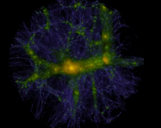
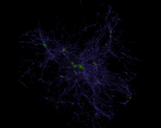
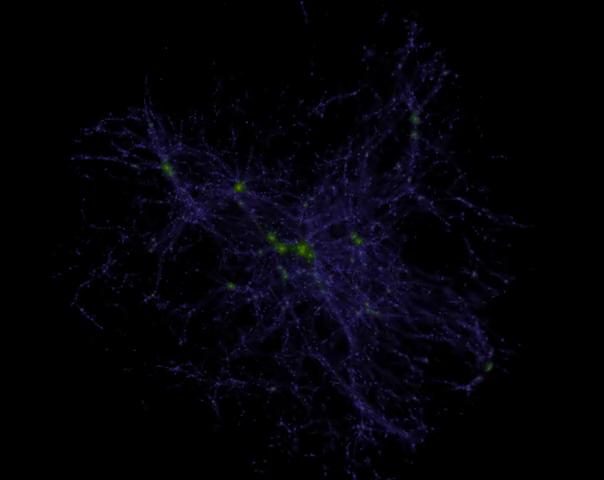
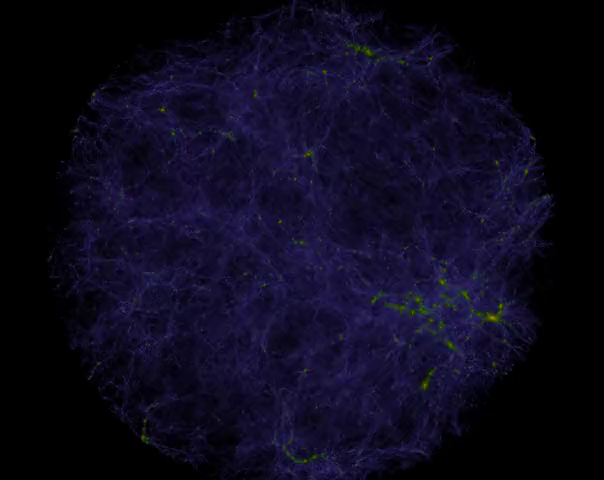
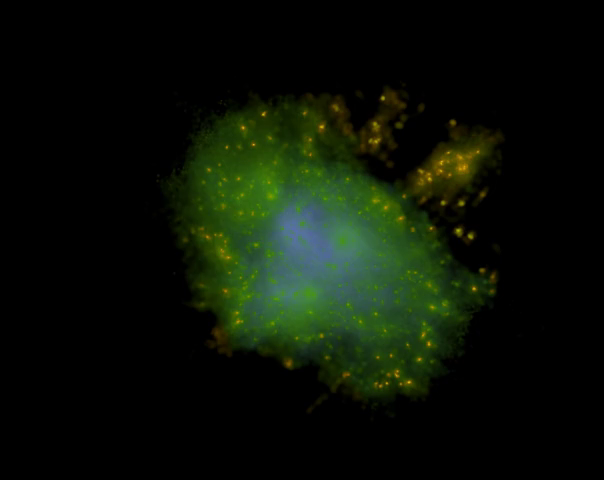
Animated views of a range of Tiamat environments at the end of the Epoch of Reionization, plus one sequence illustrating the growth of structure from z=50 to z=5.
Largest halo at z=4
3 Mpc sphere around the most massive object.
Underdense environment at z=4
3 Mpc sphere near a void center.
Void structure at z=4
10 Mpc sphere in an underdense region.
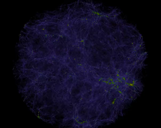
Largest halo at z=5
Isolated view of a massive structure.
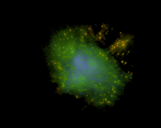
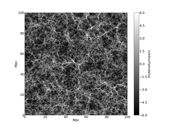
Density evolution
A slice showing structure growth from z=50 to z=5.
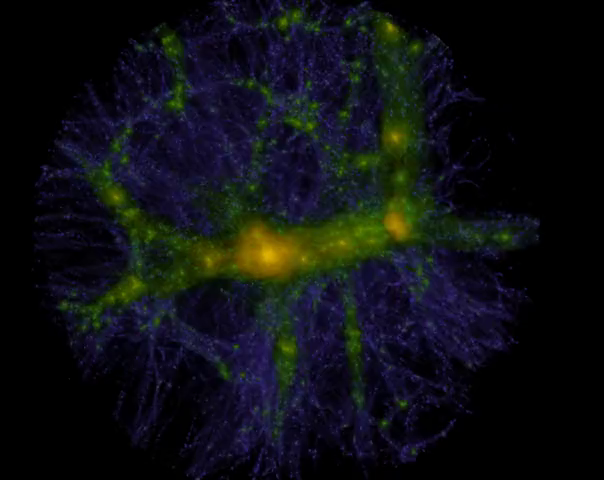
Selected Still Images
Stills of the environments animated in the movie section.
This study introduces the DRAGONS program and explores the timescales by which galaxies in the early Universe recover from collision events.
Click here to see the full paper on NASA ADS (if you do not have access to the journal, follow the arXiv link).