The Effects of Mergers on Relaxed X-ray Clusters
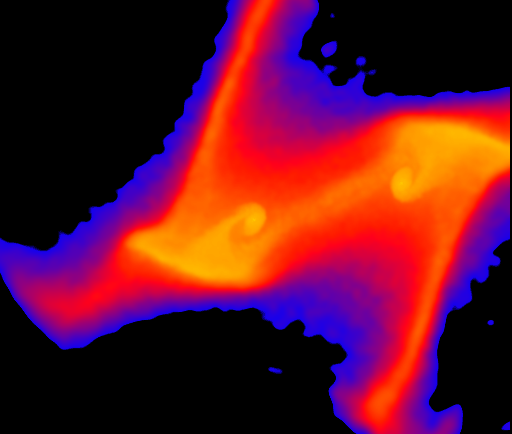
Overview
This suite of idealized two-body hydrodynamic simulations examines how relaxed X-ray clusters respond to merger events. Nine merger configurations (three mass ratios and three impact parameters) were simulated for a 1015 solar-mass primary to trace thermodynamic and X-ray observables through collision and recovery.
Why it matters: isolating merger-driven effects clarifies how X-ray/SZ observables and cool-core structure evolve during collisions.
- Tracks the response of relaxed clusters to controlled merger events.
- Explores three impact parameters across three mass ratios (nine total cases).
- Targets scaling relations, morphology, and core evolution through mergers.
Key Results
Concise summaries of flagship results, with details in the papers below.
- Mergers drive transient boosts and scatter in X-ray/SZ scaling relations.
- Cool-core structure can be disrupted and re-established on merger timescales.
- Morphological disturbances persist longer than simple relaxation metrics.
The following provides links to publications presenting the merger suite and images & movies illustrating cluster observables across collision stages.
Selected Publications
Peer-reviewed work that presents the merger suite and its key findings.
Selected Movies
Animated sequences tracing thermodynamic and X-ray/SZ observables through merger evolution.
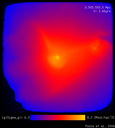
Gas surface density
Evolution of hot-gas surface density during a merger.
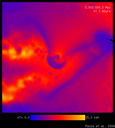
Temperature
Evolution of the hot-gas temperature distribution.
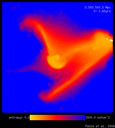
Entropy
Evolution of the entropy distribution during close passage.
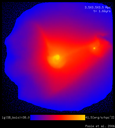
X-ray flux
Evolution of X-ray emission through the merger.
Compton y-parameter
Evolution of SZ signal across the collision.
Selected Still Images
Stills of the thermodynamic and X-ray/SZ fields at key merger stages.
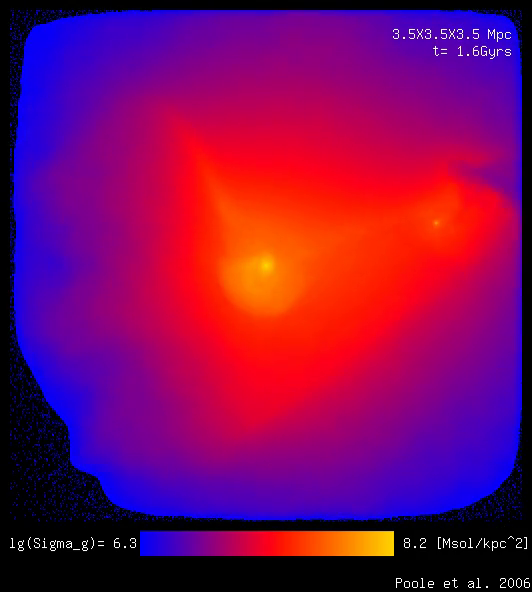
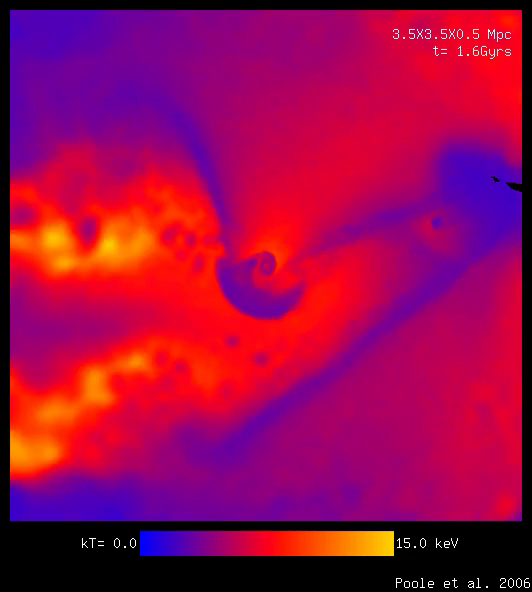
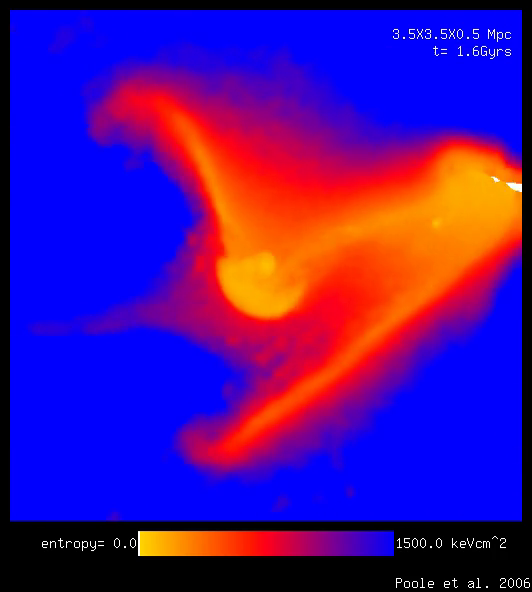
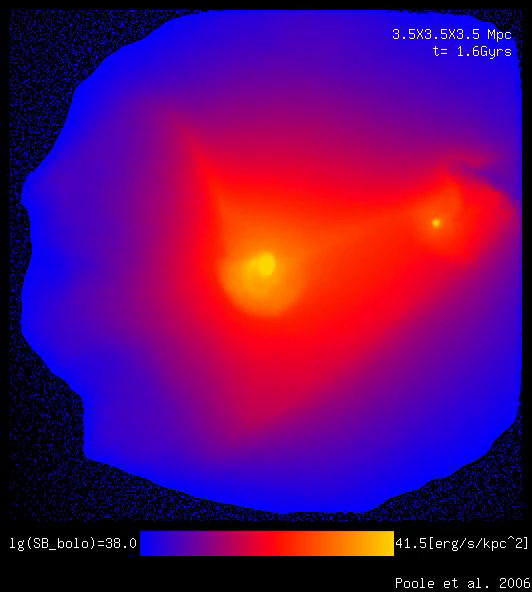
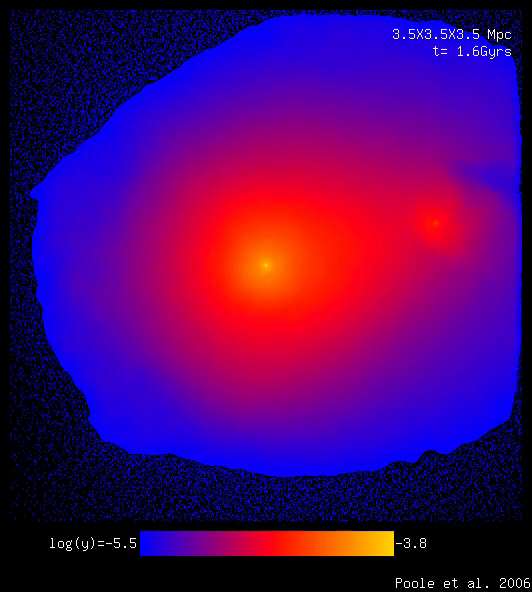
This study shows how a collision between the Universe's largest objects progresses.
Click here to see the full paper on NASA ADS (if you do not have access to the journal, follow the arXiv link).