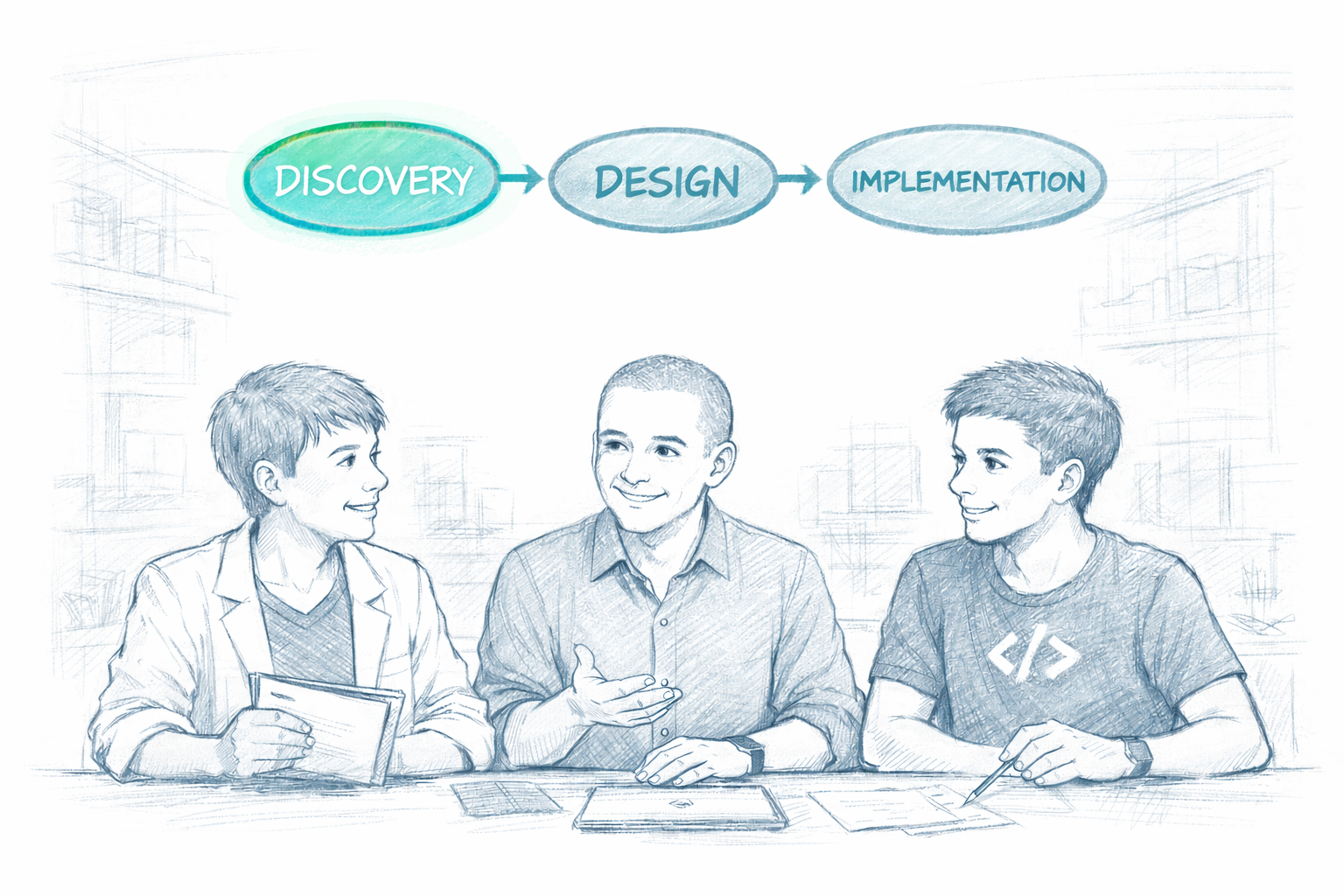
Discovery
Discovery clarifies goals, constraints, scope, and success criteria before implementation begins.
This phase aligns expectations, surfaces risks early, and ensures that delivery is grounded in clearly defined research objectives.
Professional research software delivery can be understood as three interdependent phases: discovery, design, and implementation.
Experience shows that underinvestment in discovery and design often leads to wasted effort and tools that fail to meet user needs. Restoring balance across all phases is essential.
Core principle: Sustainable outcomes depend on structured discovery, deliberate design, and disciplined implementation.
Discovery clarifies goals, constraints, scope, and success criteria before implementation begins.
This phase aligns expectations, surfaces risks early, and ensures that delivery is grounded in clearly defined research objectives.
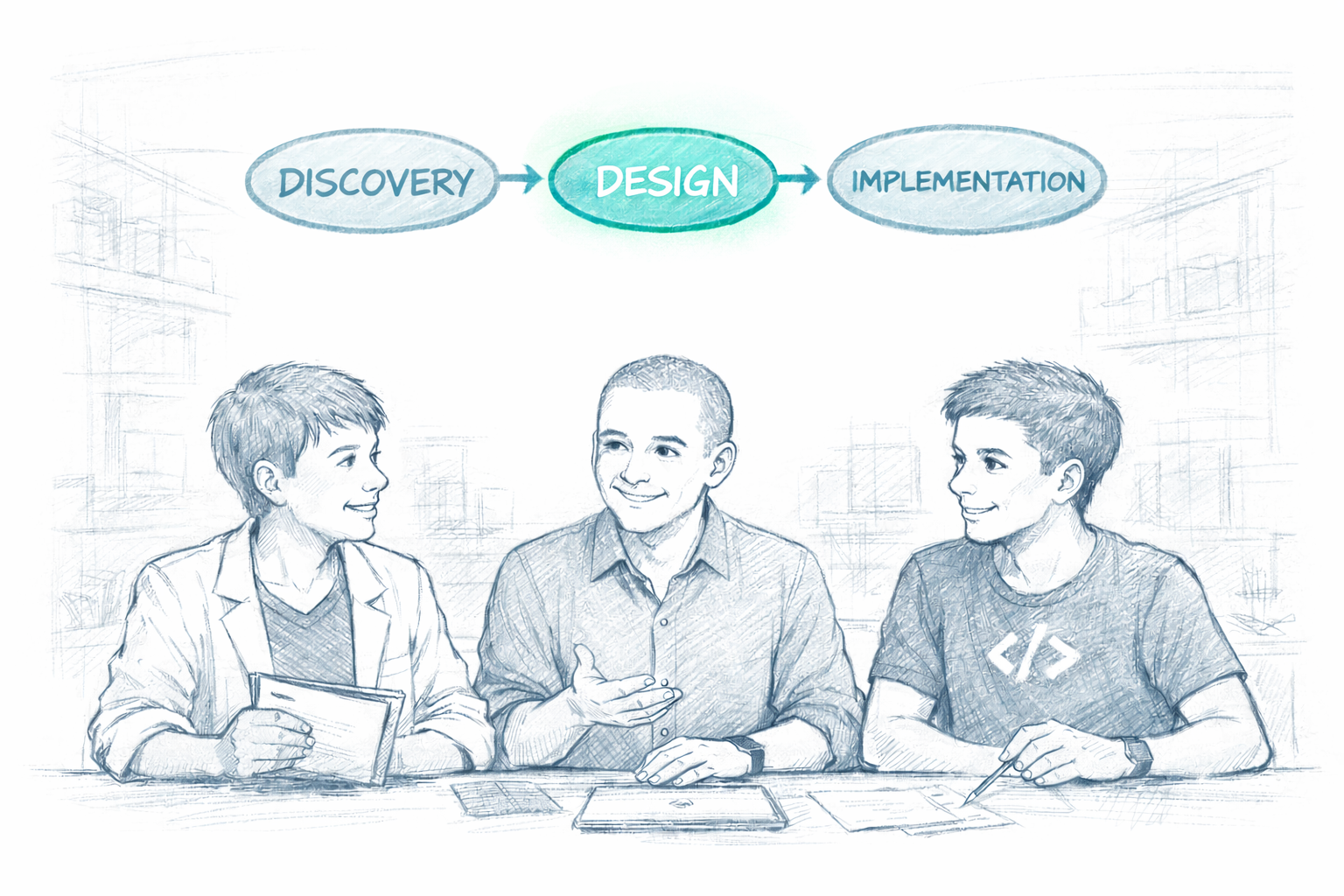
Design shapes both solution architecture and user experience.
It ensures that tools are intuitive, fit real workflows, and incorporate evidence-based feedback before significant engineering effort is committed.
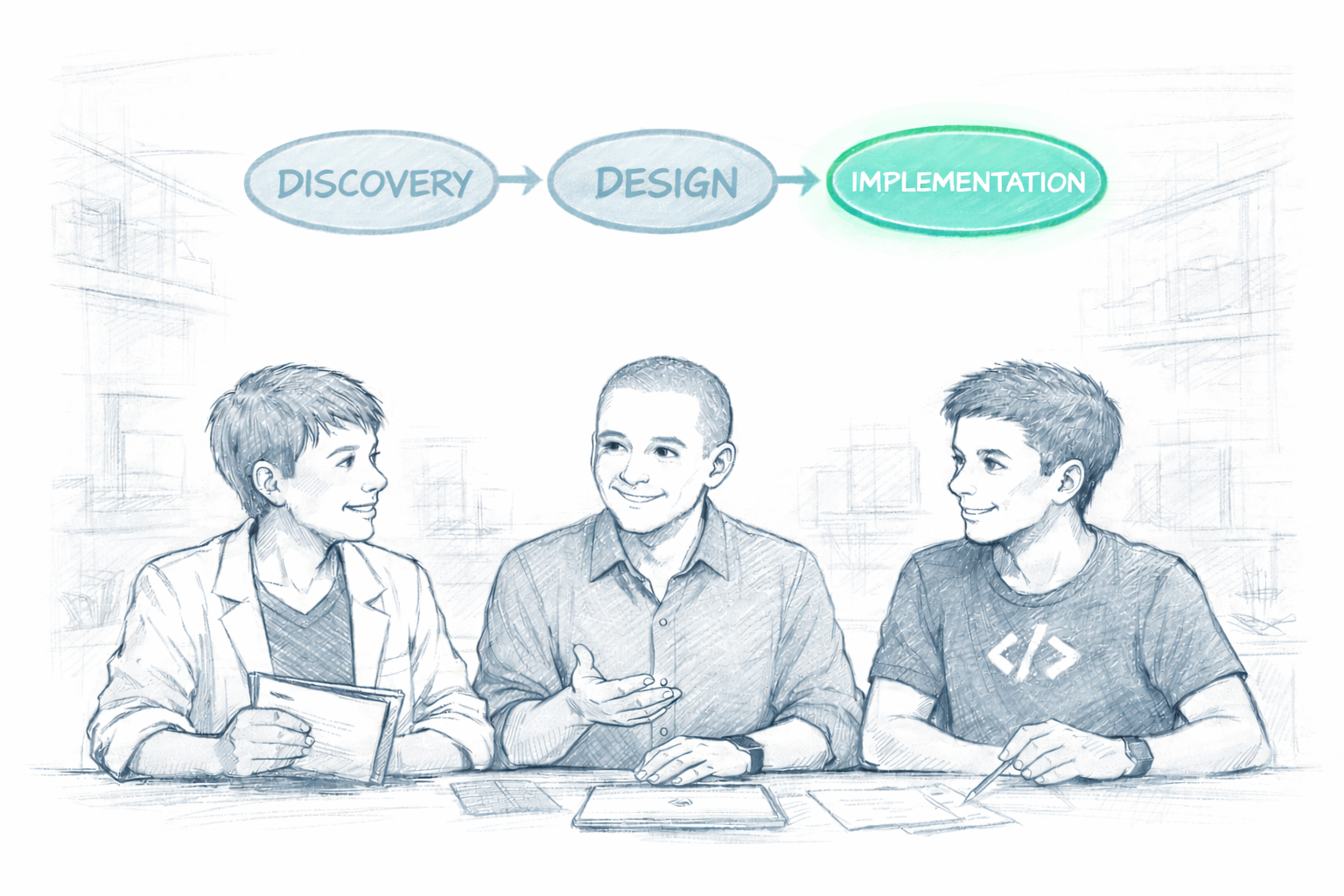
Implementation delivers the engineered solution using modern software practices.
This includes maintainability, testing, documentation, and sustainability — ensuring that tools remain usable beyond the life of a single project.
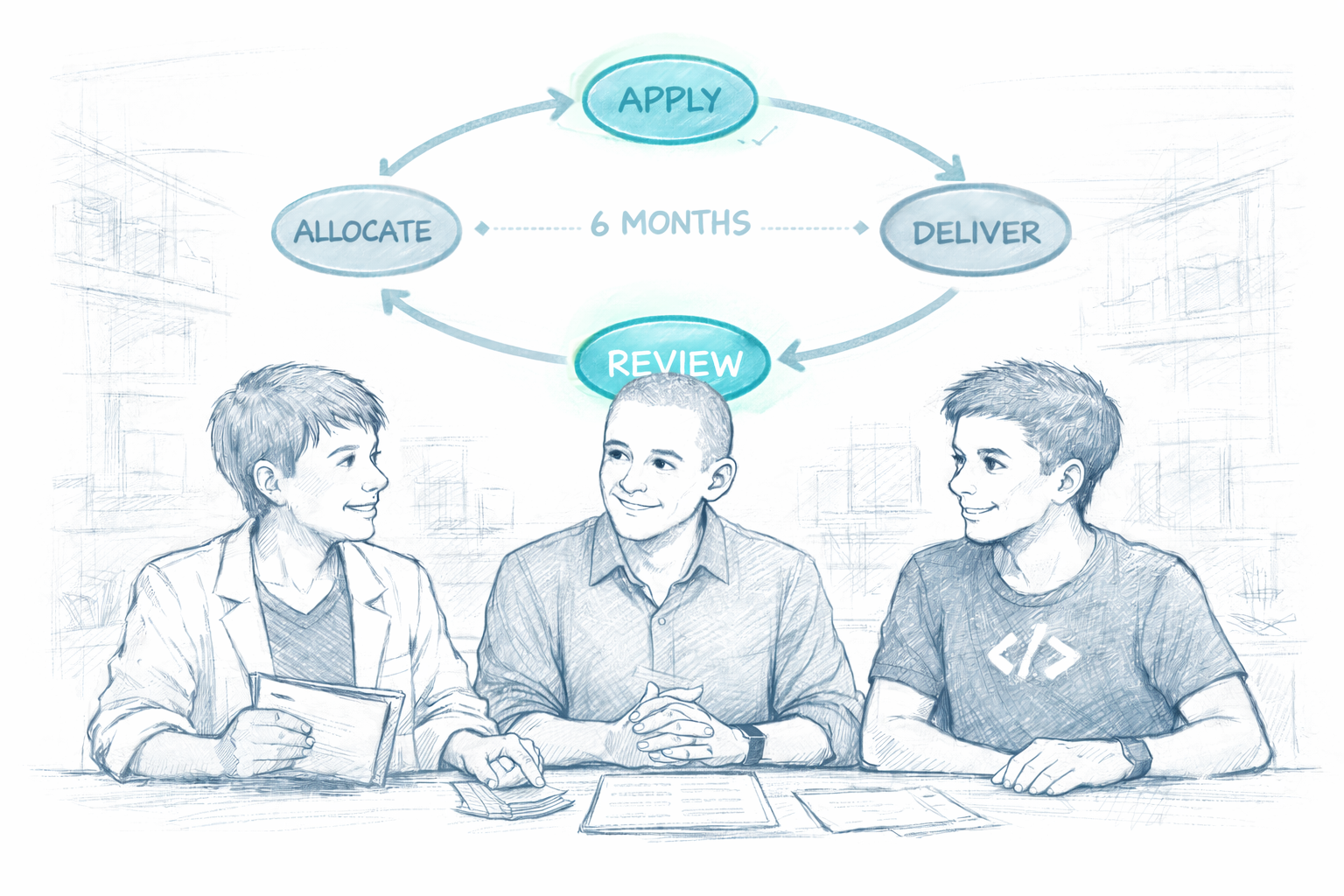
Structured, semester-based engagements provide natural review points.
These checkpoints support oversight, re-prioritisation, and continuity, enabling projects to adapt while maintaining accountability.